Squeeze In, Thaw Out: The Winter Case for the Café Table in Everyone’s Way
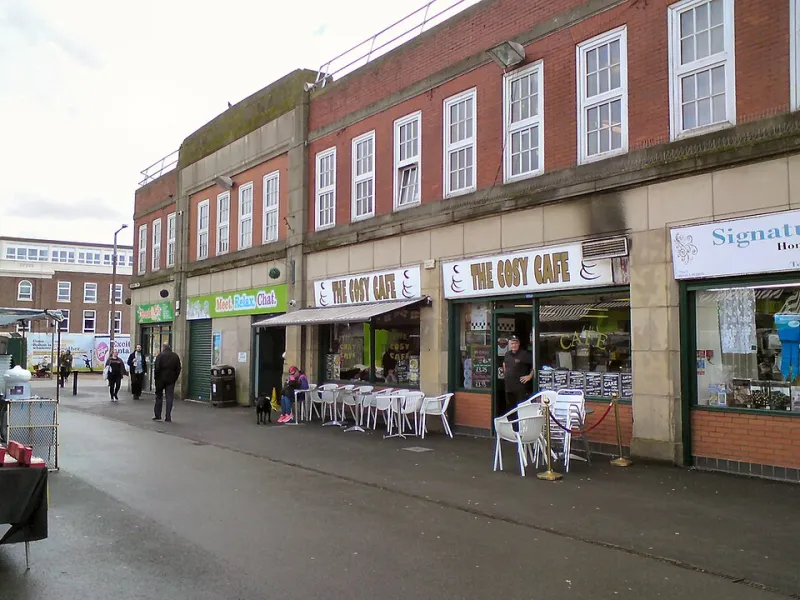
Photo: Gerald England , CC BY-SA 2.0, via Wikimedia Commons
November has a way of redrawing the map of a café. In summer, the best table is by the window: light, air, a bit of people-watching, maybe a dog to admire. By the first proper cold snap of 2026, the geography has flipped. The window is a draught. The back room is a fridge. The table everyone wants is the one wedged beside the radiator, the one that is too narrow for two laptops, too close to the cake fridge, and directly in the path of anyone carrying a tray.
It is, by most design standards, a terrible seat. It is also the best one in the house.
The quiet politics of the warm wall
Every café has a winter hierarchy. The window table is for the optimistic, the corner banquette for the couple who got there early, the long communal bench for anyone who wants to feel part of something without having to talk. Then there is the warm table: the improvised perch against the wall, the one with the hissing radiator, the condensation on the adjacent glass, and a view of the queue’s collective back. It is cramped. It is often in the way. It is, for about four months of the year, the most coveted square foot in the room.
Watch what happens when someone leaves it. A cold walker with a damp coat will spot it from the door. A regular will look up from their soup and calculate the distance. A solo reader will pretend not to care, then move with quiet purpose once the plates are cleared. The warm table is not usually reserved. It is won by timing, patience and a willingness to sit with your elbow near the napkin dispenser.
That awkwardness is part of its charm. A seat in the middle of the room says ‘I belong here.’ A seat against the radiator says ‘I have made a small, sensible compromise with the British weather.’ It is a humble sort of victory, and a very British one.
A table for the thawing walker
Winter café culture is not really about staying in. It is about coming in. The radiator table is where the coast path walker lands after a morning of salt wind, where the market shopper pauses with a bag of leeks, where the cyclist peels off a glove and orders something with more milk than they would admit to in summer.
These are not people looking for a workspace. They are looking for a thaw. The warm table suits them because it asks very little. You do not need to spread out. You do not need to hold court. You need a mug, a bowl of something hot, and a wall that has been quietly storing heat since the morning rush. The narrowness is a feature: it keeps you compact, close to the warmth, and honest about why you came in.
Cafés that understand this tend to leave the table alone. They do not fill the space with a display of retail jars or a stack of menus. They put a hook nearby for the wet coat. They keep the radiator clear. They know that the best winter seat is often the one that looks like an afterthought.
Solo, but not separate
There is a particular kind of comfort in sitting alone at a table that is slightly in the way. You are not hidden. You are not banished to a dark corner. You are part of the traffic of the room, but with a warm wall at your back. The queue passes. Someone says sorry as they squeeze by with a toasted sandwich. The coffee machine steams. You are left with your book, your soup, your thoughts, and the gentle radiator hiss that sounds like the building breathing.
For solo café-goers, this matters more than cafés sometimes realise. The window seat can feel exposed. The back corner can feel like a punishment. The warm table offers something in between: company without conversation, warmth without fuss, a small claim on the room that does not require a laptop fortress or a three-course lunch.
It is also a good table for eavesdropping, though we would never encourage that. The warm wall has excellent acoustics. You will learn more about a town’s allotment politics than you ever wanted to know.
The awkwardness is the point
There is a temptation, when something becomes quietly popular, to make it a ‘thing’. Cafés may be tempted to install a designated cosy corner, buy a faux radiator, add a neon sign, and call it a winter experience. Please do not. The warm table works because it is not staged. It is the real radiator, the real draught, the real narrow gap between the table and the wall. It is the seat that exists because a building is old and a room is awkward and someone once put a small table there because it fit.
Comfort should not become a design cliché. The best cafés make the most of their warm spots by leaving them useful: a cushion on the bench, a clear path to the counter, a shelf for a hat, a plug socket that is not a trip hazard. They do not need to label it. They just need to let it be the table everyone walks past — and secretly wants.
A small winter manifesto
So here is a modest proposal for the colder months. If you see the warm table free, take it. Sit close to the wall. Order the soup. Let your coat dry on the back of the chair. Do not feel guilty about the queue squeezing past; they are only jealous. And if you are the one running the café, do not tidy it away. The radiator table is not a design flaw. It is a small piece of winter infrastructure, and it is doing more for the neighbourhood than any chalkboard slogan ever could.
At Sovereign Light Café, we will always have a soft spot for the seat that is warm, narrow and slightly in the way. It is not the prettiest table in Britain. It is just the one you remember when the wind picks up and the light goes low.