The Gravy Hour: How a Weekday Roast Found Its Own Seat at the Table
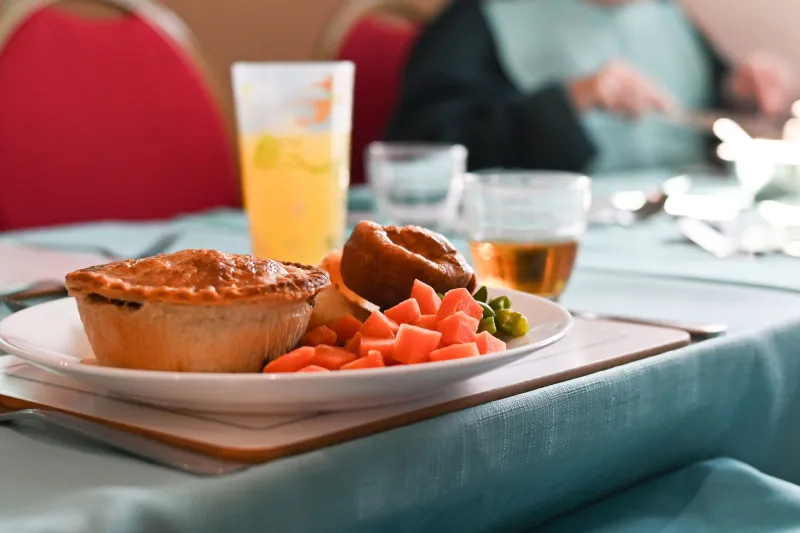
On a Wednesday at ten past six, most cafés are thinking about stacking chairs. The coffee machine has been backflushed, the pastry case is down to a lonely flapjack, and the pavement tables are already in shadow. But at a handful of rooms around the UK, the lights are still on and the tables have been pushed together. There is a jug of gravy doing the rounds, a dish of greens steaming by the pass, and a room full of people who have decided that roast dinner does not have to wait for Sunday.
This is the midweek café roast: not a formal carvery, not a weekend blowout, but a quieter ritual that seems to be finding its feet in 2026. It suits the way many of us actually live now — working from home some days, finishing early on others, feeding children before bath time, or simply wanting a proper sit-down meal without the Sunday scrum.
The Wednesday Table
The appeal starts with the calendar. Sunday roast carries a lot of baggage: the booking, the parking, the relatives, the feeling that the whole country is trying to eat at the same time. Wednesday has none of that. A café can offer a roast at 5.30pm and still have the room cleared by eight. Diners can walk in after work, order a plate of slow-cooked shoulder and buttered greens, and be home before the evening has properly begun.
That early slot matters. In a seafront café in Whitley Bay, the midweek roast is pitched at the after-school crowd and the dog-walkers coming off the promenade. In a converted mill room near Hebden Bridge, it is a Thursday lunch that rolls into an early tea. In a neighbourhood café in Bristol, the tables are laid for six and the menu is on the blackboard by Tuesday afternoon. Different rooms, same instinct: give local people a good roast without asking them to surrender a whole weekend day to it.
Why a School Night Suits It
A weekday roast is a practical meal. It uses up the vegetables that arrived on Monday. It gives the kitchen a chance to cook a bigger cut without the pressure of a Sunday service. It can be priced more gently than a weekend sitting, because the room is already open and the staff are already in. And it gives cafés a reason to open later on days that might otherwise end at four.
For diners, the advantages are just as clear. The pace is slower. You are more likely to get a table without booking a fortnight ahead. You can bring a neighbour, a work friend, a grandparent and a toddler, and nobody minds if the gravy arrives before the conversation has properly started. There is something gently civilising about a roast on a Wednesday — a small marker in the week rather than a grand occasion.
Seasonal Plates, Not Sunday Stodge
The best midweek roasts are not trying to mimic a hotel carvery. They are café food first: seasonal, generous, a little more flexible. Expect roast roots with fennel seed, braised leeks, buttered Hispi cabbage, cauliflower cheese in a shallow dish, and gravy that tastes of the meat rather than the granules. In autumn, there might be squash and sage; in deepest winter, parsnips and red cabbage; by early spring, purple sprouting broccoli and new potatoes.
Vegetarian plates are often where these menus show their character. A good café will not simply leave the meat off and hand over a nut roast from the freezer. It might serve a whole roasted celeriac with green sauce, a mushroom and barley pie, or a squash and butterbean gratin with a proper jug of veggie gravy. The point is not worthiness. The point is that the roast is a format, not a fixed recipe — a way of putting seasonal food at the centre of the table.
Three Rooms to Watch
You do not need a famous name to find this happening. Look for the café that already has a strong lunch trade and a good relationship with its greengrocer. A small room with a chalkboard menu and a few shared tables is often a better bet than a large restaurant trying to add a roast as an afterthought.
The signifiers are usually quiet ones: a hand-written note in the window saying roast from 5pm, a booking sheet behind the till, a vegetarian option that changes with the market, and a takeaway container ready for the person who wants a plate at home. In Cardiff, one neighbourhood kitchen serves a Thursday roast with a short Welsh cider list. In Leeds, a café attached to a community bookshop runs a Wednesday roast with a shared table and no booking fee. In Glasgow, a west-end room does a Thursday evening plate with oatcakes and a sharp chutney on the side. None of these are trying to be the next big thing. They are simply feeding their regulars well.
What to Look For
If you are seeking out a midweek roast, start with the timing. A café that serves from 5pm to 7.30pm is usually aiming at local diners rather than a late-night crowd. Ask whether booking is recommended; the good ones often hold a few tables back for walk-ins. Check the gravy situation — a proper roast should come with enough of it, and a jug on the table is a sign of confidence. Look at the vegetable offering, too. If it is just carrots and peas in the middle of winter, the kitchen may be coasting. If there is something braised, roasted and pickled on the plate, you are probably in the right place.
Price is part of the picture. A midweek roast should feel like a fair exchange, not a Sunday premium. Many cafés keep the plate simple — one meat, one veggie main, a couple of sides — and charge accordingly. That is the version that can become a habit rather than a treat.
The Neighbourhood Bit
The midweek roast also does something useful for café culture. It brings people in at a time when the room would otherwise be empty. It gives solo diners a reason to sit at the counter. It lets families eat out without the weekend theatre. And it creates a small, reliable moment in the week when neighbours are likely to bump into each other over a dish of roast potatoes.
That is the quiet magic of it. A Sunday roast can feel like an event. A Wednesday roast feels like a place you belong. The gravy is already on the table, the chairs are not yet stacked, and there is still time for one more cup of tea before the lights go off. In a year when so much of café life is about making the ordinary feel considered, that seems exactly right.