Sober Spritz Season: The Café Aperitivo Rewriting Early Evenings

Photo: Unknown authorUnknown author, Public domain, via Wikimedia Commons
The high street used to change hands at five o'clock. Offices emptied, pubs filled, and cafés pulled down the shutters. In 2026, that handover is looking less fixed. Across the UK, cafés are staying open into the early evening and putting something other than a flat white on the table: alcohol-free spritzes, seasonal shrubs, tonic-based aperitivi and small savoury plates built for conversation rather than dinner. Call it the sober aperitivo. It is not a novelty any more. It is a quiet recalibration of how cafés use their day.
From flat white to five o'clock
The reasons are practical as much as cultural. Cafés already have the rooms, the glassware, the fridges and the seats. What they do not always have is a reason for customers to come back after the afternoon slump. An early-evening alcohol-free menu gives them one. It also answers a real demand: not everyone wants a pub, and not everyone who wants a pub wants alcohol. The sober-curious shift is not a niche now. It is a broad church of people who are cutting down, cutting out, driving, pregnant, training, on medication, or simply tired of the way a second drink can swallow a whole evening.
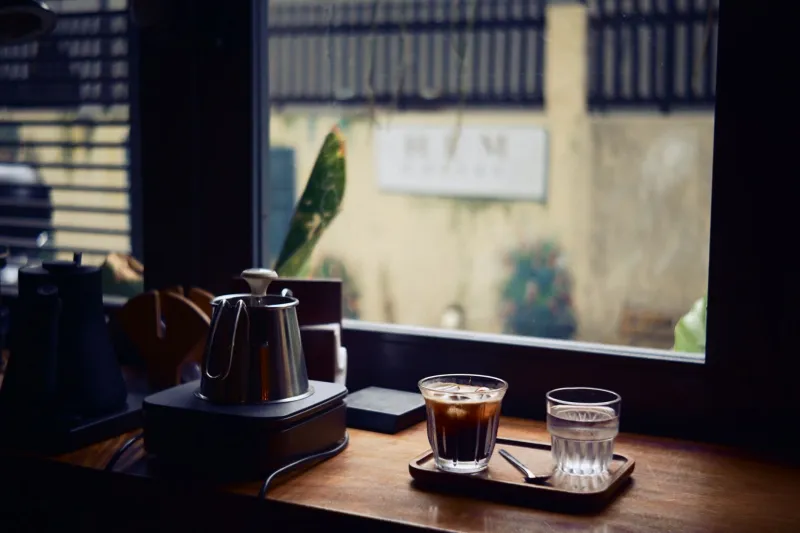
What makes the café version work is that it does not pretend to be a bar. There is no sticky carpet, no sports screen, no pressure to order a round. There is a table, a window, a cold glass and something savoury within reach. For many people, that is a far more welcoming early evening than a noisy pub.
What is in the glass
A good alcohol-free aperitivo is not just fizzy pop in a wine glass. Look for drinks with bitterness, acidity and a little savoury depth. Shrubs — drinking vinegars made with fruit, sugar and vinegar — are turning up on café menus in flavours such as quince, pear and thyme, or cranberry and rosemary. They are sharp, grown-up and excellent with tonic. Verjus, kombucha and gentle bitters are doing similar work. A spritz might be built from a non-alcoholic aperitif, soda and a wedge of orange, or from a house-made cordial with citrus peel and herbs.
The best versions taste like they belong at the table. They are not trying to mimic a negroni so much as offer their own thing: bright, herbal, a little bracing. If a café lists its alcohol-free options as seriously as its coffee, that is usually a good sign.
The plate matters
An aperitivo without food is just a drink. The small plate is what turns it into a ritual. Expect olives, almonds, pickled things, a wedge of cheese, crostini, focaccia, a dish of warm beans with olive oil, or seasonal vegetables — roast squash, beetroot with horseradish, shredded cabbage with toasted seeds. The point is not a full meal. It is a spread of little things that reward slow eating and make it easier to talk.
In late autumn, the best café aperitivo menus lean into roots and preserves. Think pear with blue cheese, quince paste, pickled walnuts, a tiny tart with onion and thyme. These are the sorts of plates that suit a cold high street and a warm room. They also happen to be inexpensive for the café to produce, which is why the format is spreading.
Why it builds community
The sober aperitivo works because it gives people a place to land between work and home. It is early enough for a school pick-up, late enough to feel like an occasion, and low-stakes enough that you can bring a neighbour you barely know. Cafés that run these sessions well tend to attract a mixed room: book groups, new parents, shift workers, people who do not drink, people who do drink but not on a Tuesday. The absence of alcohol changes the social temperature. Conversations last longer. Nobody is counting rounds.
It also helps that the format is naturally inclusive. A pregnant friend, a sober friend and a friend who simply wants a good drink can all sit at the same table without anyone feeling like the odd one out. That sounds small. In practice, it is the whole point.
What a well-run sober aperitivo looks like
A good session has clear timing — usually 5 till 7, not a vague all-evening promise. The alcohol-free menu is easy to find, not buried under the coffee list. The drinks are served in proper glassware with ice and garnish, because presentation matters. The small plates are savoury and not too sweet, and there is water on the table without having to ask. Staff know what is in each drink and can recommend without a hard sell.
Most importantly, the café should not treat it as a gimmick. If the room is bright and the music is loud and the only seats are rickety stools, the aperitivo will feel like a marketing exercise. If the lights are low, the tables are clear and there is a bowl of almonds within reach, it will feel like somewhere to stay.
The high street test
Not every café should stay open late. Some are perfect as they are, closing at four with the last scone. But for those with the space and the inclination, the alcohol-free aperitivo is one of the more interesting things happening on UK high streets right now. It gives cafés a second life in the day and gives the rest of us somewhere to go that is not a pub, not a restaurant and not home just yet. This November, look for the chalkboard that says spritz, shrub and small plates. It might be the warmest invitation on the street.